
01By warehouse type
WMS for Food and Beverage Warehouses
Lot control, expiry and rotation, holds, traceability drills, temperature zones and returns: what a food and beverage warehouse should ask of a WMS.
By warehouse type
A food and beverage store room, a parts depot and a pallet warehouse do not count, pick or store the same way. Start with your type, then the features.
A cold store worries about temperature and dates. A parts depot worries about thousands of small items. A food and beverage warehouse has lot numbers and recalls to think about. The right features follow from the goods.
We organise this site two ways: by type of warehouse, and by the operations features that cut across types, such as cycle counting, slotting and kitting. Pick whichever way you think.
Cycle counting, slotting and kitting all depend on knowing which item sits where and what is moving. These are screens from the Microsive demo platform, demo data only, showing shelving, a forklift task and an equipment list.
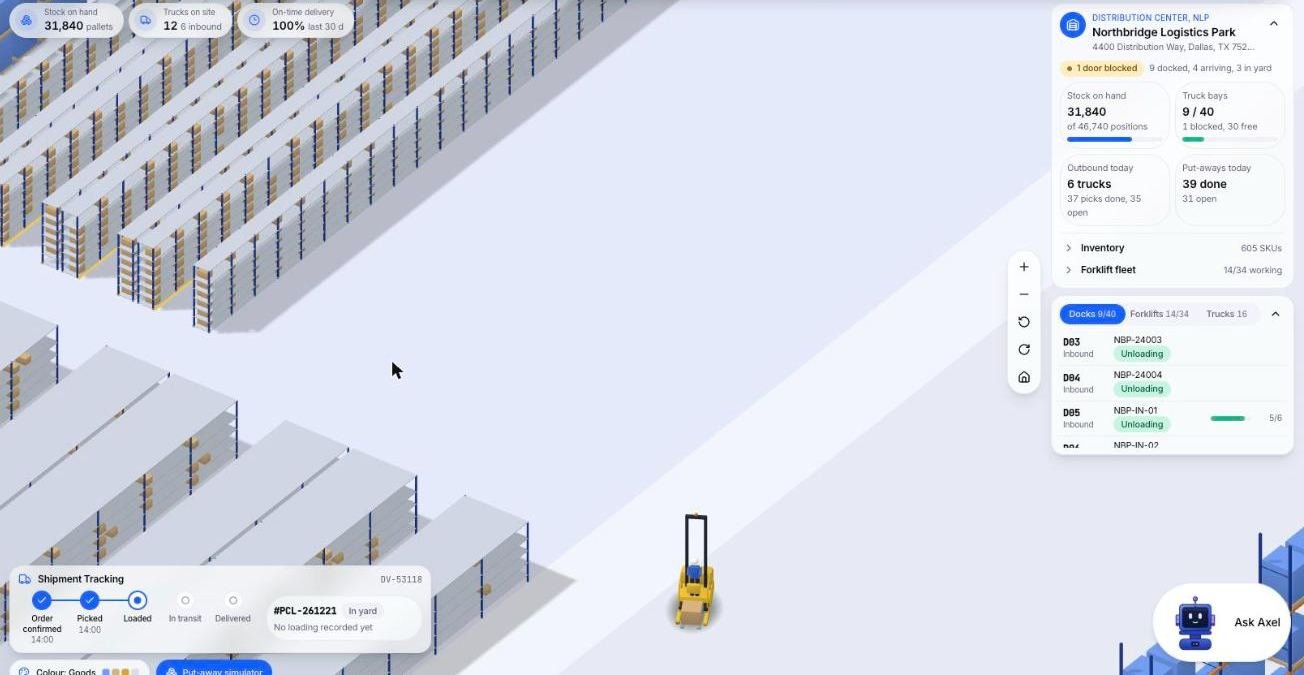
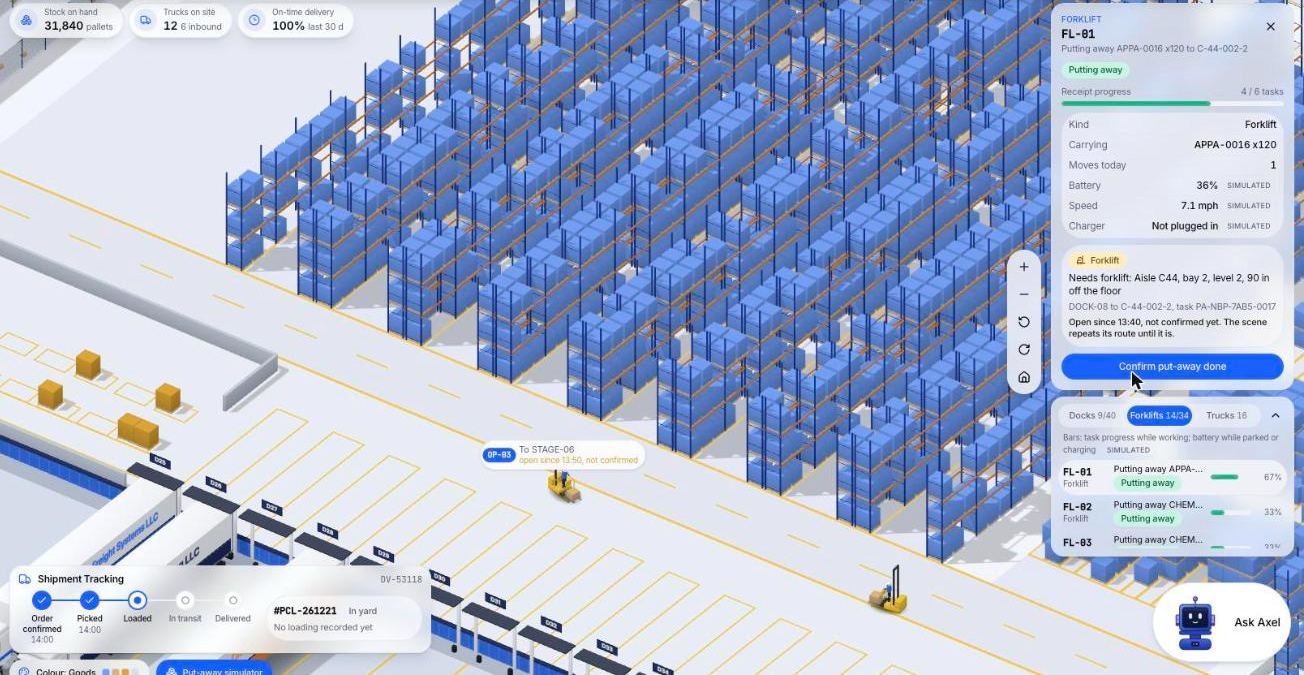
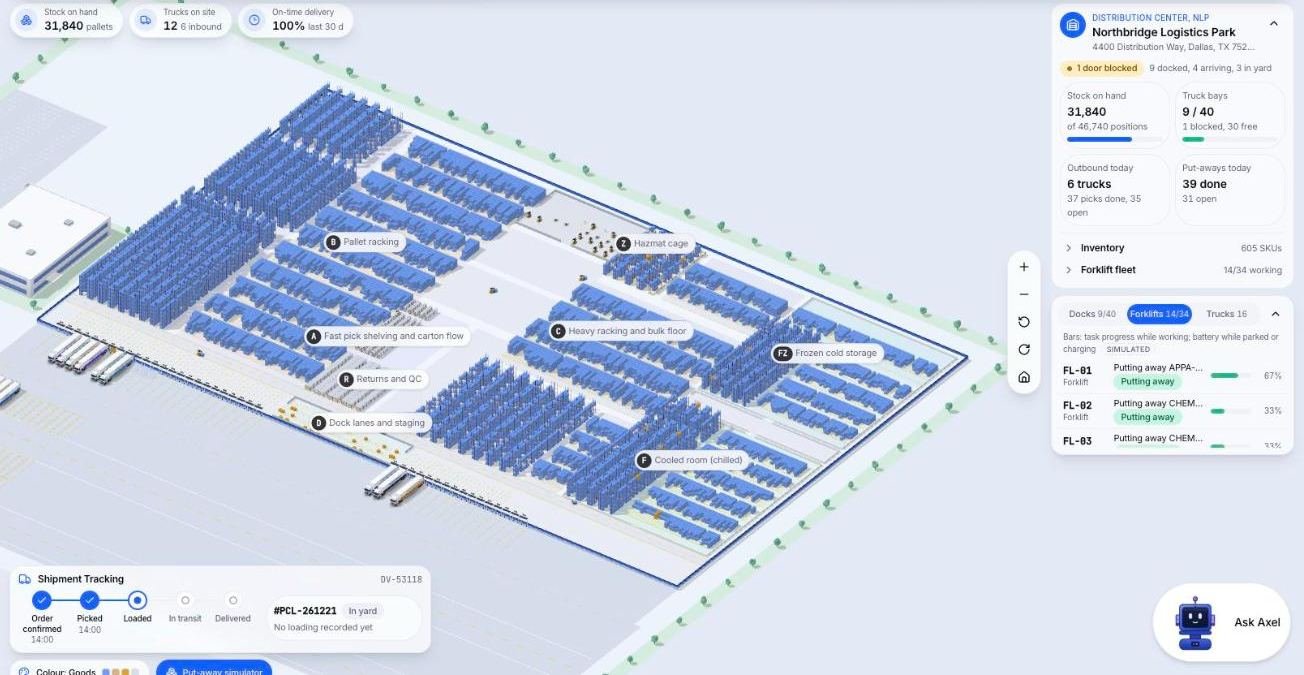
What changes for food and beverage, parts, apparel and others.
01By warehouse type
Lot control, expiry and rotation, holds, traceability drills, temperature zones and returns: what a food and beverage warehouse should ask of a WMS.
Keeping counts right without shutting down the building.
02Cycle counting
How cycle counts are chosen, what the counter sees, how differences get a recount and approval, and nine questions to ask a vendor.
Putting fast movers where they are quick to reach.
03Slotting
Warehouse slotting in plain terms: the velocity, size and weight rules, the golden zone, a spreadsheet start, and what slotting software adds.
Bundling items into a single sellable unit.
04Kitting
What kitting is, how kits differ from bundles and assemblies, how a WMS tracks components, and what to check when stock runs short.


